
Root canal treatment allows us to save a tooth rather than remove it
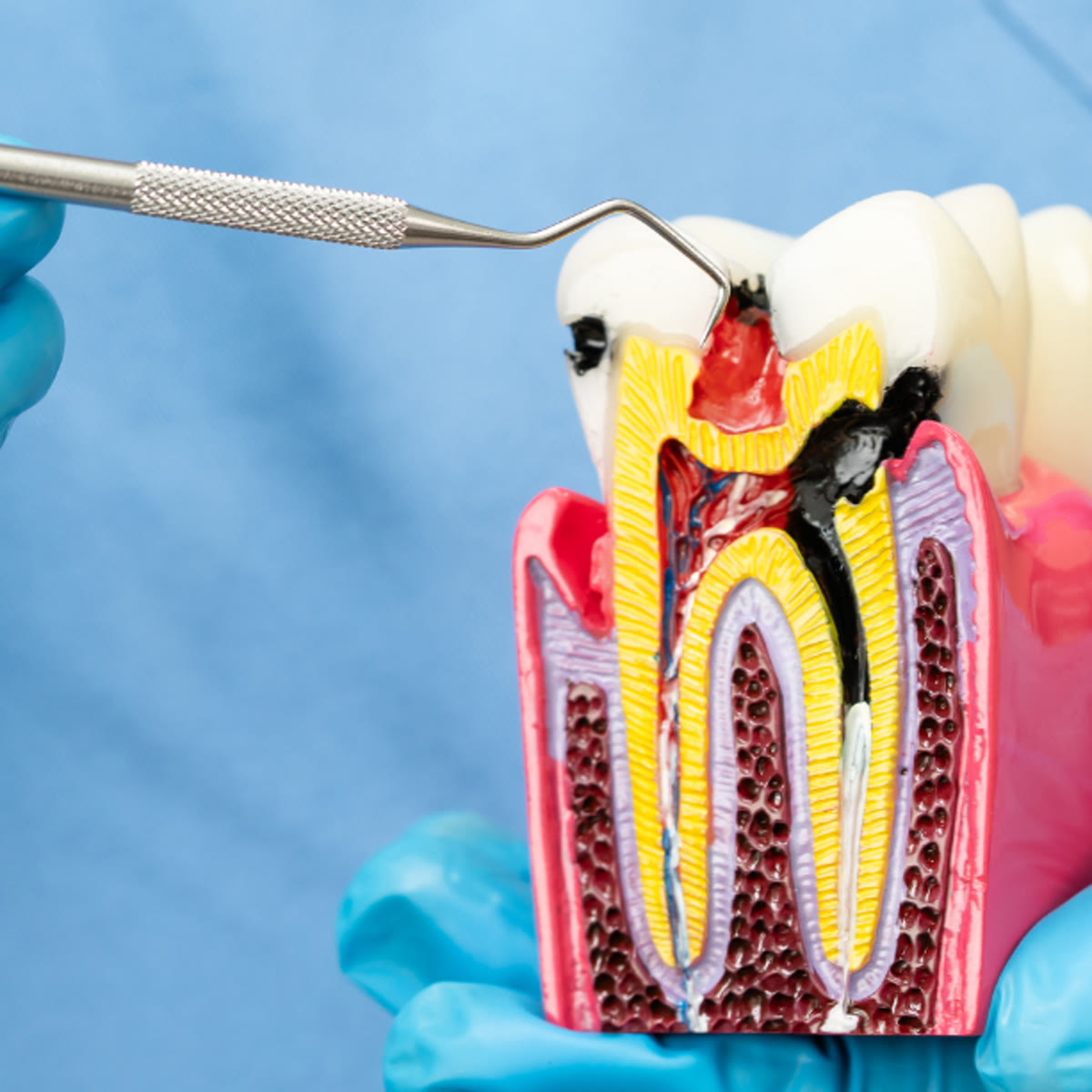
Root canal treatment, also known as endodontic treatment, is a highly effective procedure designed to save a tooth that has become infected, inflamed or damaged deep within its structure.
Rather than removing the tooth, root canal treatment allows us to remove the damaged pulp and nerve tissue, thoroughly clean the inside of the tooth, and then seal it to prevent further infection.
Our experienced clinical team has carried out root canal treatment for many years, helping to preserve hundreds of natural teeth that may otherwise have required extraction.
Whenever it is clinically appropriate, we believe saving your natural tooth is usually preferable to removing it. A natural tooth can continue to function normally after successful root canal treatment and can be cared for just like your other teeth.
Why might I need root canal treatment?
Inside every tooth is a soft area called the dental pulp, containing nerves and blood vessels. If decay, a deep filling, trauma or a crack allows bacteria to reach the pulp, it can become inflamed or infected. You may experience:
- Toothache or persistent dental pain
- Sensitivity to hot or cold
- Pain when biting or chewing
- Swelling around the tooth or gum
- A dental abscess
- Discolouration of the tooth
- Or sometimes no symptoms at all
The need for root canal treatment may be identified through your symptoms, clinical examination or dental X-rays. Our dentists will only recommend it when it is considered an appropriate option for saving your tooth – and we’ll explain what is happening, discuss the alternatives and provide a clear treatment plan and accurate costs before you begin.
What does root canal treatment involve?
Modern techniques and effective local anaesthesia mean that treatment is generally comfortable and, for many patients, feels similar to having a conventional filling.
-
1. Examination and diagnosis
We’ll assess the tooth, discuss your symptoms and take appropriate X-rays or other diagnostic images to determine the extent of the problem.
-
2. Removing the infection
The tooth is carefully isolated and a local anaesthetic is administered. A small opening is made to allow access to the infected or damaged pulp, and the affected tissue is removed.
-
3. Cleaning and shaping
The root canals are precisely shaped and thoroughly cleaned to remove bacteria and infected tissue. Where an abscess is present, appropriate treatment is also provided to manage the infection.
-
4. Filling and sealing
Once cleaned, the canals are filled and sealed to prevent bacteria entering again. Treatment may be completed in one or more appointments, with a temporary restoration between them where appropriate.
-
5. Restoring the tooth
Afterwards the tooth may require a permanent filling or, where additional strength and protection are needed, a crown – particularly for teeth that have lost significant natural structure.
Does root canal treatment hurt?
One of the biggest misconceptions about root canal treatment is that it is inherently painful. With modern techniques and effective local anaesthesia, the procedure itself should be comfortable for most patients. In fact, root canal treatment is often performed to relieve the significant pain caused by an infected or inflamed tooth.
Some tenderness or sensitivity can occur for a few days afterwards, particularly if the tooth was already infected, but this usually settles as the surrounding tissues recover.
If you’re anxious about dental treatment, please tell us. We can discuss ways to make your experience as comfortable and relaxed as possible, including our dental sedation services where clinically appropriate.
What happens if I don’t have treatment?
An infected or irreversibly damaged tooth will not usually heal on its own. Without treatment, the infection can progress and may lead to an abscess, increasing pain, swelling and damage to the surrounding bone. The alternative may ultimately be extraction.
Although removing a tooth can sometimes be the correct treatment, preserving your natural tooth is often preferable where it can be predictably restored. Keeping your natural teeth can help maintain your bite, function and appearance, and may avoid the need for more complex tooth replacement in the future.
Once successfully root-filled, your tooth can be maintained much like your other teeth. We’ll monitor it during your routine examinations and advise if any further treatment is required.
Don’t wait for it to get worse
If you’re experiencing persistent toothache, sensitivity, swelling or pain when biting, contact our team to arrange an assessment and find out whether your natural tooth can be saved.